The building on the south side of Syracuse had been a lot of things before it became a coworking space.
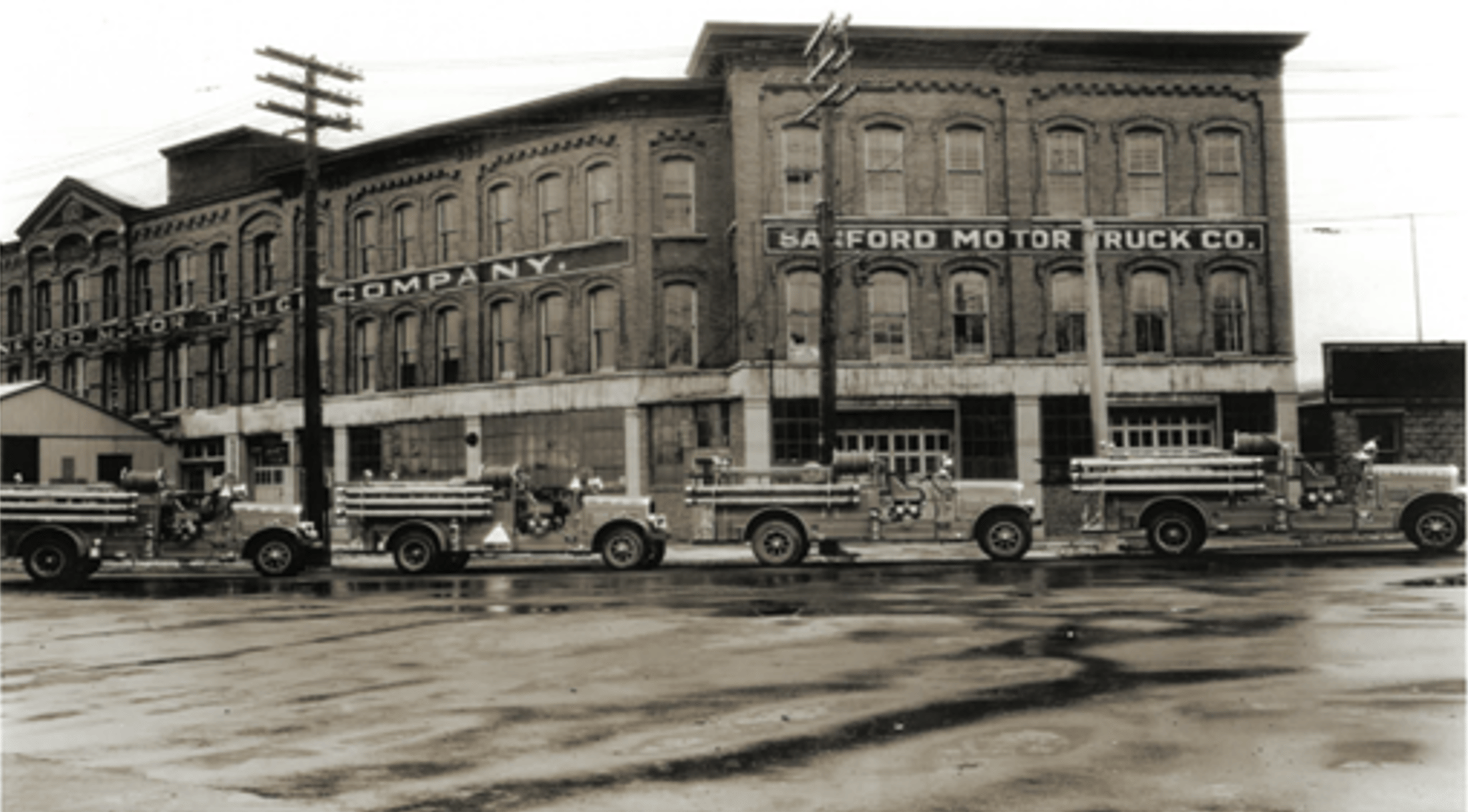
A gathering place for the neighborhood. A post office. A butcher shop. A well-known regional paint factory called Strathmore, whose name still runs in giant letters along the exterior wall. For years after that, it sat empty.
Then a couple of Cornell neuroscientists named Adam Anderson and Eve de Rosa discovered it. They weren't looking for a coworking space. They were looking for a place to build something around healing. Around art. Around the idea that health isn't just a clinical matter — it can come through community, creativity, and the company you keep.
The coworking space was one of the first pieces of the puzzle. And when Tim Bryant came on board two years ago to run it, the whole thing started to click.
An unplanned fit for a community manager
 Tim hadn't planned to become a community manager. He had a background in massage therapy, a long-running private practice that grew almost entirely by word of mouth, and a half-finished master's degree in social entrepreneurship that got interrupted when he sustained a traumatic brain injury.
He first encountered GereBlock Lounge when he was invited to an event. He saw the building, fell in love with it, and couldn't shake the feeling that he needed to be part of whatever was happening there.
"A lot of what I believe in terms of my values really fit here. I just said, hey, I'd love to have this position to try to move this in the right direction, particularly around community."
He reached out, started talking with the owners, and realized his background made him an unusual but well-suited candidate. His public health training had led him to study the social determinants of health, and loneliness and community disconnection ranked high on that list. His years of listening deeply as a massage therapist had made him unusually good at reading people. And his experience building his own practice had given him enough business confidence to take on something new.
Mission isn't a wall hanging
A lot of coworking spaces say they're community-driven. GereBlock has had to figure out what that actually means in practice, because the owners built their vision around healing and inclusion before they had a fully formed business model.
Tim's approach has been less about marketing campaigns and more about showing people who they are — and letting that do the work.
"I tell people when they come and tour our space that this is who we are as a community. It's not for everybody. And we'd rather you be in a space where you feel like you belong."
That kind of radical transparency tends to attract the right people fast. When someone comes in for a tour, Tim listens for specific signals: Is this person mission-aligned? Do they work for themselves, or for an organization that's giving something back? Are they looking for more than a desk?
When he arrived, the private offices were less than half full. Today, only one sits vacant. Membership has held steady, and Tim is looking to grow it intentionally — not just in numbers, but in the right fit.
Community by design, not by accident
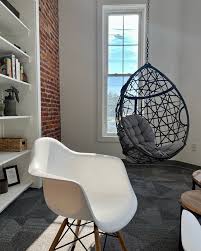
GereBlock Lounge doesn't have dedicated desks in the open area. The common space is relaxed, flexible, and deliberately unhurried. That's not an oversight — it's a signal about what kind of place this is.
Some of Tim's best community-building has happened through events. He recently moderated a panel of three local entrepreneurs, each with expertise in different areas. He invited people at any stage of building a business to come, ask questions, and connect. Around 30 people showed up. After the panel, they broke into small groups. He barely had to engineer it — people found each other.
"I just needed to get everybody in the same room, because you're all amazing in your areas, and I don't know what's going to happen. And it was amazing."
He also co-runs a monthly queer coworking day with a local organization called Come Out Central New York. It's open to everyone: members, allies, and people just curious about the space. It's become popular and serves a dual purpose: it builds community, and it gives people who might feel uncertain about whether GereBlock is a fit for them a low-stakes way to find out.
An aerial fitness instructor recently moved in and is planning yoga classes. Game night is on the calendar as an alternative to the predictable coworking happy hour. None of this is arbitrary. Tim pays attention to what actually brings people back.
What operators can take from this
- Know your 'no.' If you're for everyone, you're for no one. Tim is direct with tours about who GereBlock is and isn't for, and it's made the community stronger.
- Give people a low-stakes way to try you. A free day pass after every tour removes a barrier and lets culture do the selling.
- Not all events are equal. A panel of entrepreneurs brought 30 people. Game night outperformed coffee hours. Experiment, and pay attention to what actually draws people in.
- Connection is a skill, not a perk. Tim's background in listening and community-building is, in his words, 'Lead Community Connector.' It's a title that applies to what he actually does every day.
- The physical space tells a story. GereBlock has original brickwork, a renovated second floor in a still-evolving building, and Strathmore paint on the wall. The imperfection is part of what makes it feel real.
- Solo operators can still go deep. Tim runs the entire space — including, on bad days, the plumbing — by himself. He's found that staying deeply mission-aligned compensates for what he can't scale.
How Coworks software fits into it
 Tim came into the role after GereBlock had already adopted Coworks as its management software. He didn't choose it, but he's grateful for it every day.
For someone who's not a tech-first person, the ease of the platform matters more than feature lists. What Tim notices is how quickly he can find answers when he needs them — and that when he reaches out to support, he hears back from a real person he's spoken with before.
"It's just easy to navigate. And I love that it's so personable. I reach out and I hear back from someone I've talked to before. Our members love it. I talk about it all the time."
The platform's access control integration has also become a small but meaningful selling point on tours. Tim sends prospective members a link to unlock the building before they even arrive. A lot of people, he says, light up a little at that detail. It's a signal that the space takes things seriously.
For a space that's still building itself out — physically, programmatically, financially — having software that doesn't require a learning curve lets Tim stay focused on what he's actually there to do.
What's next for GereBlock
Tim and the owners are talking about expanding — adding flexible private offices that could open up for events, or shift between configurations as the community's needs change.
Virtual mailbox services are on the growth list. So are more events and more reasons for people to be in the same room together, doing something that feels worth showing up for.
But the foundation is solid. A community that actually wanted to find each other. A manager who listens well and believes, genuinely, that being around the right people is a form of health. And a building that was, from the very beginning, meant to be a place people came to take care of things and gather.
Some things don't change much.